Hej! Jeg hedder Sofie.
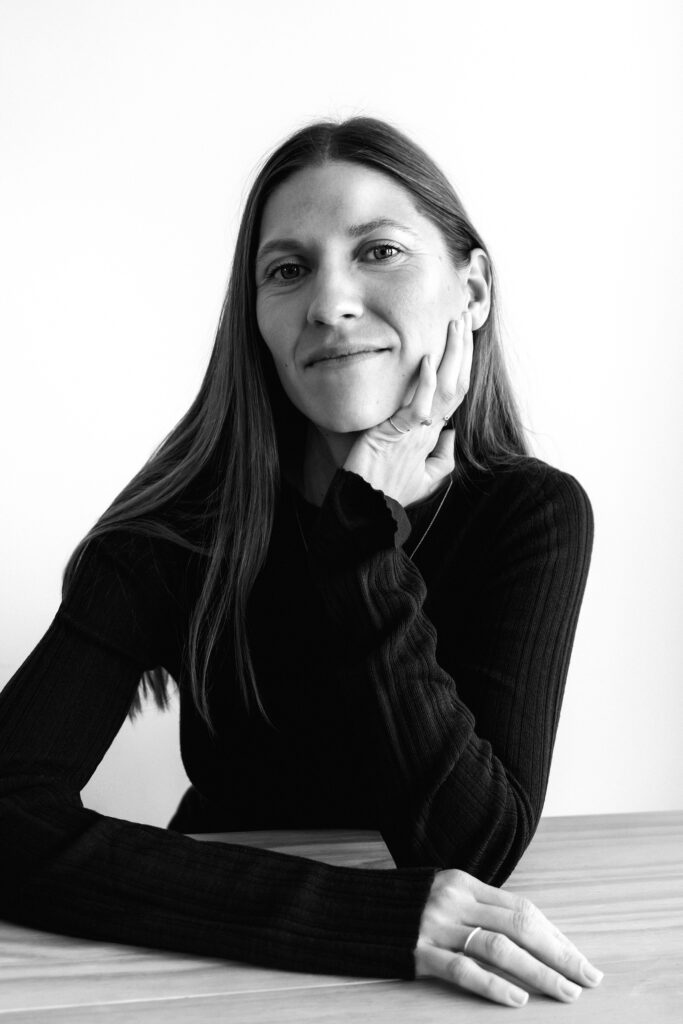
Sofie Malmborg Hansen is Copenhagen born and raised. She moved to the Bay Area in 2021 to join the faculty at UC Berkeley’s Scandinavian Department. At Berkeley, she has taught Beginning and Intermediate Danish as well as courses on Danish and Nordic language, culture, history and literature. Across her classes, she aims to foster curiosity, collaboration and creative expression.
Sofie has an MA in Anthropology from the University of Copenhagen. As an anthropologist, she has worked to empower young people to build and engage in local democracy.
Outside of academia, she is a published author. Her debut novel, Bargums synder (Politikens Forlag, 2020), about Danish transatlantic slave trade, received the Danish Debutantpris, a prize awarded annually to the best literary fiction debut published in Denmark. Her second novel, Gaven, about an anthropologist studying private bankers in an offshore finance center, was released at the esteemed publisher Gyldendal in 2025.
Sofie has previously worked as a translator of fiction and taught university level classes on academic writing. Her ongoing interests include economic anthropology, new literary fiction, podcasts, and wild plants.
- Professionals relocating to Denmark
- Partners of Danish speakers
- Students preparing for study abroad
- Heritage learners reconnecting with Danish
Communicating with cultural competency
Learning Danish is not only about mastering inversions, guttural R’s and the æ, ø and å, but about developing the ability to communicate meaningfully and engage with Danish culture in real-world contexts. My teaching is grounded in the Five C’s of World Language Learning: Communication, Cultures, Connections, Comparisons, and Communities.
The Five C’s are standards developed by the American Council on the Teaching of Foreign Languages to guide students toward both linguistic proficiency and cultural competence. In practice, this means working with authentic Danish materials – film, literature, news, radio etc. – while reflecting critically on cultural parallels and differences and connections to students’ own experiences.
While I encourage the use of apps such as Duolingo to memorize vocabulary, what apps fundamentally lack is the real-world context. When you study Danish with me, you will learn to speak Danish and navigate Danish-speaking communities with in-depth cultural understanding.
Curiosity, collaboration, and creative expression
My teaching emphasizes curiosity, collaboration, and creative expression from both teacher and students. I design my tuition and classes to reflect the topics you are curious about, and expect you to carry your curiosity about Danish language and culture with you from the classroom out into the real world. I design creative assignments adapted to different learning styles, and encourage students to express themselves creatively in Danish whenever possible. In group classes, I strive to create an inclusive, respectful classroom where all participants feel confident and able to contribute.
My approach is based on 5 years of teaching experience from the University of California, Berkeley. At Berkeley, I was part of the campus-wide Discovery which aims to bridge the gap between academic curiosity and real-world impact for undergraduate students. As a Discovery Fellow, I reworked curriculum from passive lecturing to project-based learning with real-world output. My students interviewed Danish speakers and produced bilingual podcasts and designed creative, visual exhibitions on Scandinavian literature.
Immersion without overwhelm
I believe in immersing (not drowning!) students in Danish. I speak Danish in the classroom from day one. But at beginning levels, grammatical concepts are explained in English. I take advantage of the similarities between Danish and English – their shared linguistic roots – and help students map grammatical concepts onto language structures they are already familiar with. At the same time, I help students develop the confidence and ability to think in Danish rather than translating word by word.
Resources
The National Standards Collaborative Board. (2015). World-Readiness Standards for Learning Languages. 4th ed. Alexandria, VA: Author.
Berkeley Discovery. (2026). About the Initiative. UC Berkeley Discovery.